Not long after I wrote about being laid off, someone connected with me on LinkedIn and said they had a software engineering opportunity. It was exactly the kind of message I wanted to receive.
The profile claimed the person was a software engineer at Slalom. It didn't have a profile picture, which felt a little strange, but not strange enough to dismiss. They called my cell phone, then texted asking me to call back. I asked to arrange something over email instead, and they sent a Google Meet invitation.
The video felt wrong before the story did
Within seconds of joining, I suspected that the person in the video wasn't real. The voice didn't line up properly with the video, and the person's movements looked repetitive. At one point, I could hear typing while both of their hands were visible in the frame.
I can't confirm how the video was made. It could have been generated, altered, or prerecorded. What I can say is that it didn't behave like a normal live call, and it appeared to me that AI-generated video was being used to make the person look real.
I asked about the company and role. The person didn't mention Slalom. Instead, they described a small team that helped job seekers get interviews and said we would receive 40% of a seeker's income if they got hired. When I asked what this had to do with software development, the answer was simply that we would be helping software engineers find jobs.
About three minutes into the call, I said I wasn't interested. The person told me the work was not illegal and explained it again. I declined a second time and left.
They never asked me for money or personal information, so I can't say what they ultimately wanted. The opportunity had changed, the explanation didn't make sense, and the claimed company affiliation had disappeared. That was enough reason to leave.
Slalom describes itself as a business and technology consulting company. I have no reason to believe it was involved. I think someone was using its name to make the LinkedIn profile and initial contact seem credible.
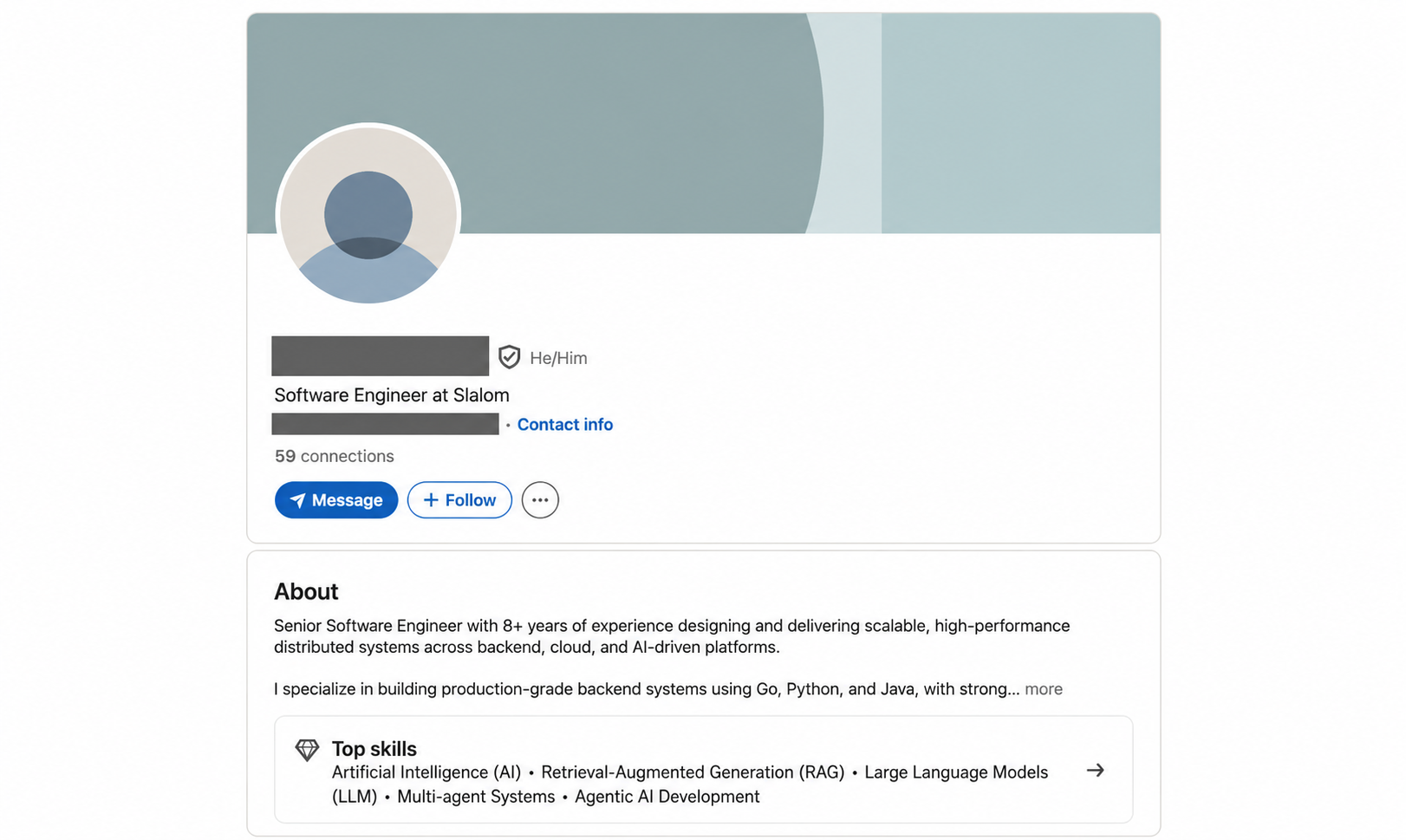
I redacted the profile's claimed identity because I could not determine whether the account was fake, compromised, or impersonating a real person.
The timing bothered me more than the AI
I was surprised that somebody was actually using this kind of video in a job scam. Until then, AI-generated video felt like something I mostly saw in demonstrations or online examples. Seeing what looked like it on the other side of a call made the risk feel much more immediate.
But the AI was not the part that stayed with me most.
This person found me through a post where I had publicly said I was laid off. They knew I was looking for work. A message about a software engineering opportunity was more likely to get my attention because it arrived at a vulnerable moment.
That makes me sad. Losing a job brings uncertainty about money, your career, and how long it will take to find another role. An apparent opportunity can feel like relief. Someone was trying to take advantage of developers who might be vulnerable or desperate enough to overlook the warning signs.
The video added another layer of credibility. A LinkedIn profile can be fake, but seeing a person speak on a call is supposed to make an interaction feel more trustworthy. That assumption is becoming less safe.
I don't think the answer is to distrust every recruiter who reaches out online. Real opportunities can also begin with an unexpected message. The difficult part is that wanting an opportunity to be real can make it easier to explain away the small things that feel off.
What I will do differently next time
The missing profile picture wouldn't have proved anything by itself, but it was one warning sign I noticed and ignored. I was eager to hear about the opportunity, so I didn't give that feeling enough weight.
Next time, I'll do more due diligence before agreeing to a call. I'll verify the company independently, check the email domain and careers page, and look more closely at whether the person's profile and story line up. If I already have suspicions, I won't be so eager to hop on a call just because it might be an opportunity.
A LinkedIn profile and a video call are not proof of identity by themselves. I also don't need to understand an entire scam before leaving. If the details stop adding up, I can trust that and walk away.
I reported and blocked the account. I still don't know who was behind it or what would have happened if I had stayed. What stayed with me is that someone saw a laid-off developer looking for work and treated that vulnerability as an opportunity. AI made the approach look more convincing, but the response is still fairly simple: slow down, ask direct questions, verify what you can, and leave when the answers don't make sense.